
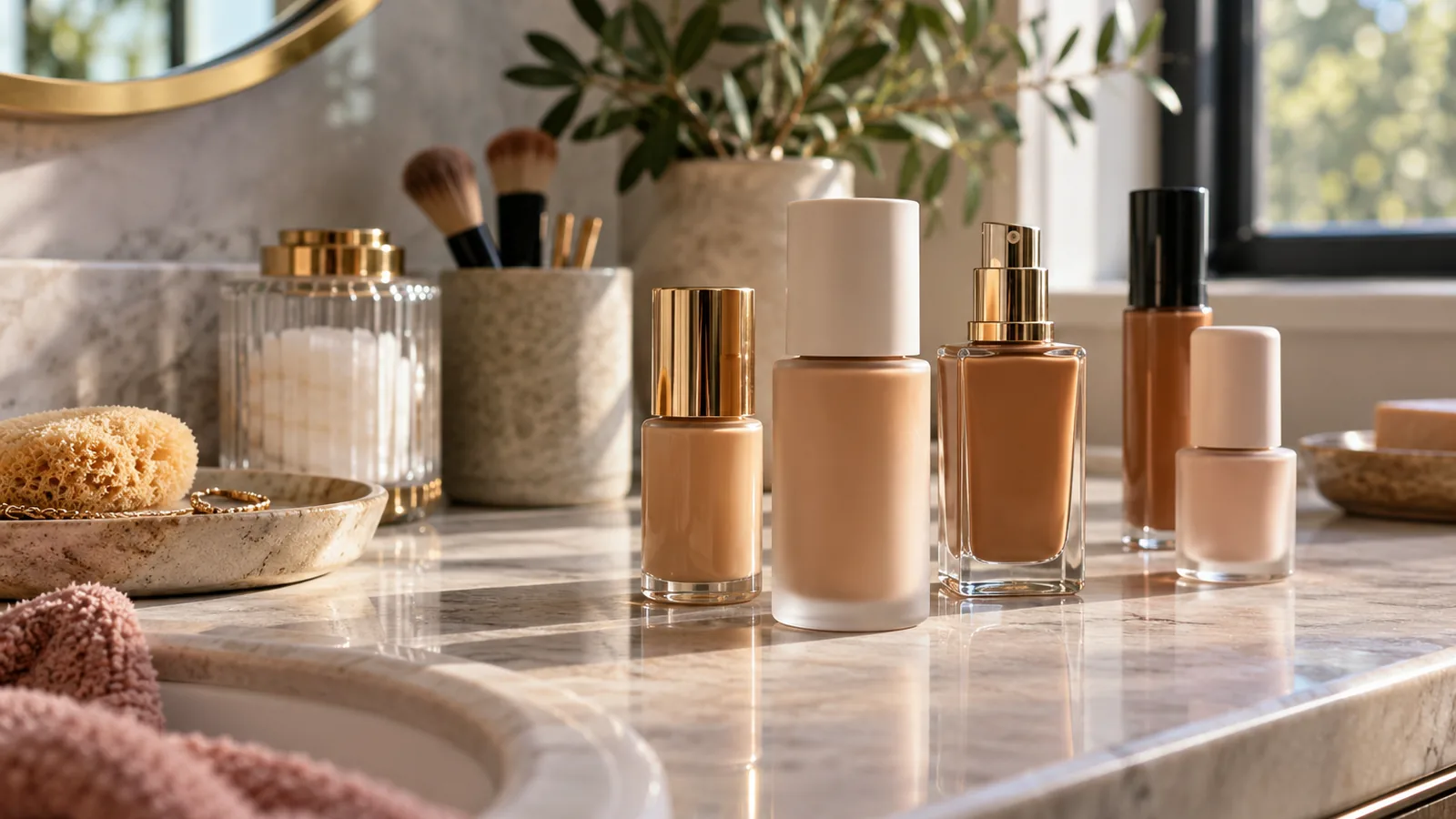
Coverage, finish, and wear time explained through real plans instead of beauty labels. The decision becomes clearer when it is separated from a perfect product photograph or an idealized routine.
A smaller, well-understood edit usually works better than a crowded one. Prioritize texture, placement, portability, and a finish that remains comfortable, and leave room for personal preference to make the final call.
The real-life scene
A skin tint suits a Saturday of errands and lunch because it fades softly and can be reapplied around the nose. For an evening event with flash photography, a medium foundation offers more control and a steadier finish.
Why it works
The right base matches the length, lighting, and touch level of the day. Coverage is only useful when the product remains comfortable and looks even where it naturally wears away.
What to check before buying
Check in daylight
Blend a stripe from cheek to jaw and look near a window after it settles.
Notice the finish later
Wear a sample for several hours before judging glow, oil control, or tightness.
Match the center of the face
A flexible match through cheeks and jaw usually looks more natural than chasing one exact spot.
The Dreszine edit
- Skin tint for flexible low coverage
- Foundation for longer polished wear
- Concealer only where needed
- A thin application first
One thing to skip
Avoid choosing a heavy formula because it covers quickly if you dislike how it feels by midday. Wearability matters more than the first mirror.
Continue the edit
Browse with the checklist in mind
Use the fit and function notes above while comparing current options. Availability and pricing can change.
Explore at Ulta Beauty ↗The lasting idea
Buy the base that works with your skin on a normal day, then adjust coverage with placement rather than forcing one product to do everything.