
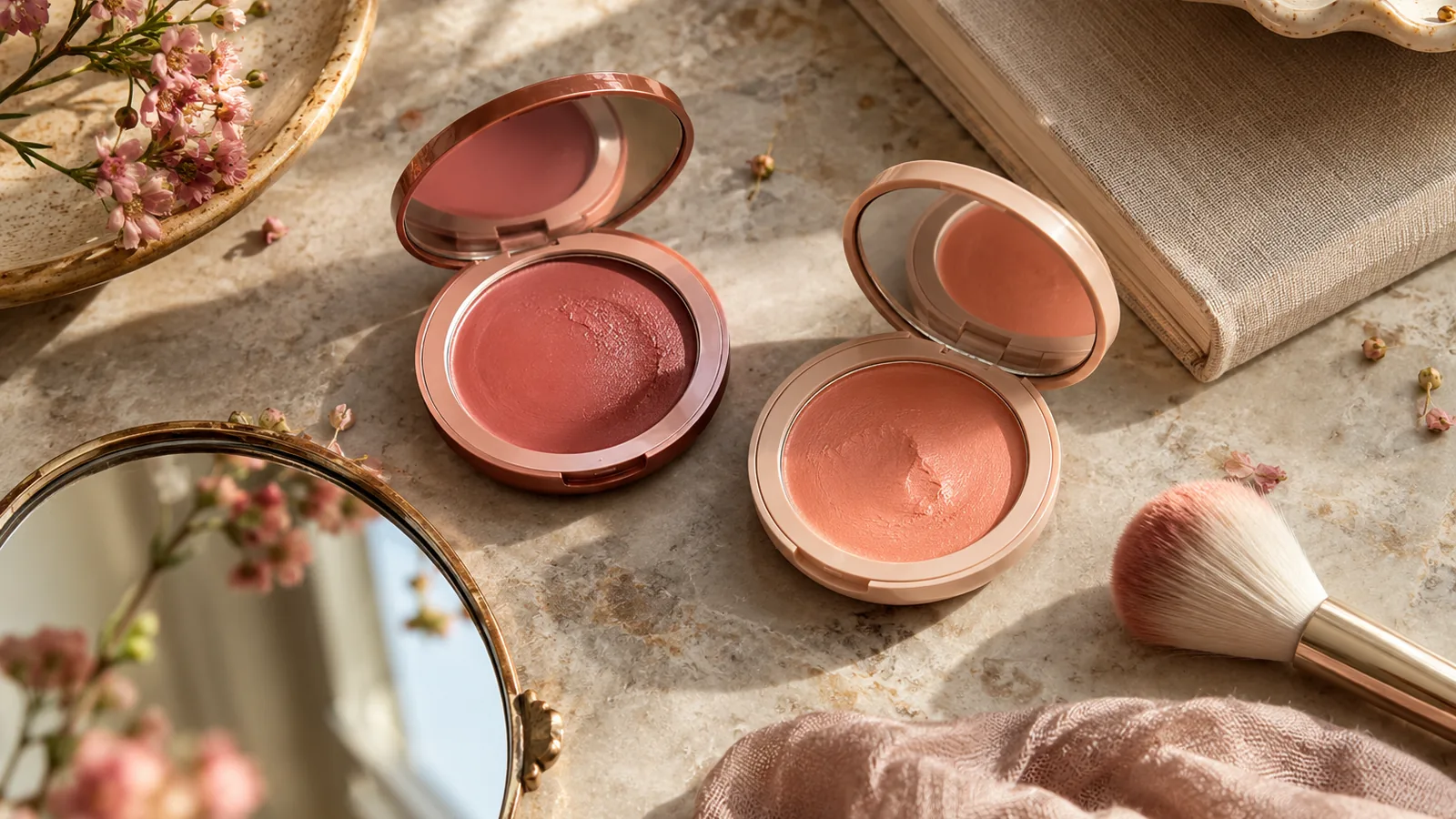
A useful approach to how to choose cream blush in natural light begins with the moment it will actually be used. Undertone, placement, and texture notes for color that stays believable beyond the vanity.
Think of the purchase as part of a system rather than a stand-alone object. Consider bathroom light, wear time, touch-ups, and the way the product comes off at night, then decide which feature genuinely solves the repeated problem.
The real-life scene
Before brunch, a muted rose is tapped high on the cheeks and the remainder crosses the nose. At the café window, the color reads as warmth rather than a visible stripe, and it softens gradually through the afternoon.
Why it works
Cream blush merges with the finish of skin and can be built in thin layers. A tone with some softness usually moves between indoor and outdoor light more gracefully than a very bright opaque pigment.
What to check before buying
Swatch two depths
One shade may disappear indoors while another overwhelms daylight; compare both after ten minutes.
Press instead of rub
A tapping motion is less likely to disturb base products underneath.
Check the cap and format
A secure compact or stick is easier to keep clean in a daily bag.
The Dreszine edit
- One muted everyday shade
- A brighter optional accent
- Fingers or one dense brush
- Thin layers over set base
One thing to skip
Skip a shade that requires a precise full face to look balanced if most mornings are simpler.
Continue the edit
Browse with the checklist in mind
Use the fit and function notes above while comparing current options. Availability and pricing can change.
Explore at Sephora ↗The lasting idea
The best blush is the one you can apply without negotiating with it. Let daylight, not the product name, make the decision.