
A belt can define a silhouette, connect shoes to an outfit, or add a useful break in a long column. The right one depends on where it sits and what it needs to hold. A trouser belt and a dress belt may overlap, but they are not always the same object.
For broad use, choose medium width, a restrained buckle, and enough holes to sit at the natural waist and the lower trouser waist. Leather or sturdy woven material should bend without feeling flimsy.
The real-life scene
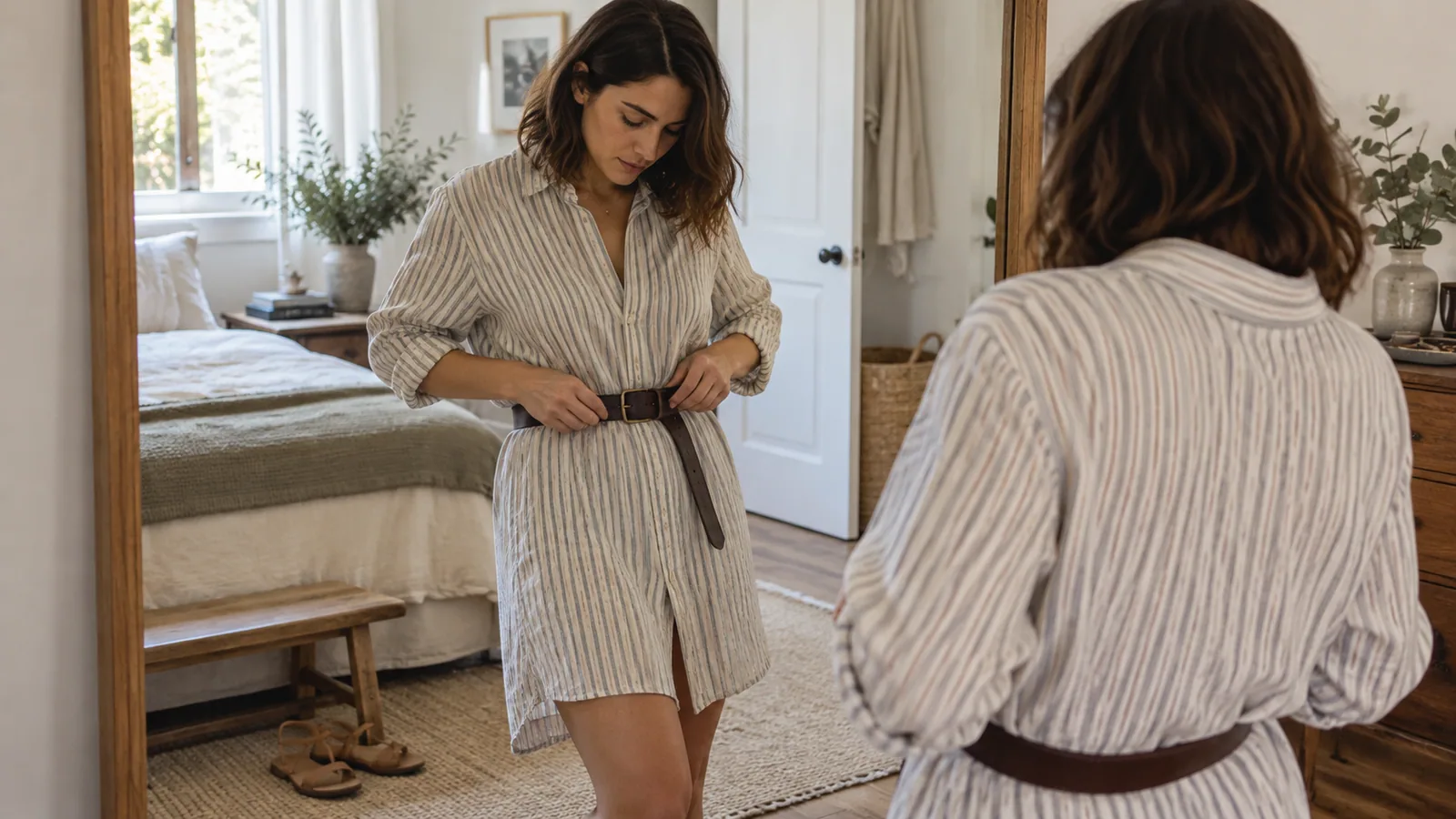
A loose striped shirt dress feels easy on its own and more deliberate with a dark brown belt placed slightly above the natural waist. Flat sandals and a matching bag repeat the tone, turning a simple dress into a composed city outfit.
Why the outfit works
The belt creates one point of structure within a relaxed shape. A low-contrast buckle keeps the eye on the silhouette rather than a single piece of hardware.
What to check before buying
Measure both placements
Waist and trouser measurements can differ significantly. Make sure the hole range covers how you intend to wear the belt.
Check the tail
The end should reach the first keeper without hanging excessively. Too much extra length disrupts the line.
Match visual weight
A heavy buckle works with denim and outerwear; a refined buckle sits more naturally with dresses and tailored trousers.
The Dreszine formula
- Medium-width belt
- Relaxed one-piece base
- Shoe or bag in a related tone
- Simple jewelry
One thing to skip
Avoid overtightening to create a waist. Fabric should gather intentionally and breathing should remain easy when sitting.
Continue the edit
Browse with the checklist in mind
Use the fit and function notes above while comparing current options. Availability and pricing can change.
Explore at Nordstrom ↗The lasting idea
Use a belt to clarify a shape rather than correct a body. The best version makes the outfit easier to read and easier to wear.