
Tailoring can turn a good garment into a dependable one, but not every fit problem is economical or structurally simple to change. Hem length, sleeve length, waist suppression, and small side-seam adjustments are often more predictable than reshaping shoulders or changing a complex rise.
Buy for the hardest-to-alter area first. A jacket should fit the shoulder and upper back; trousers should have a workable rise and seat. Let the tailor refine the edges rather than rebuild the architecture.
The real-life scene
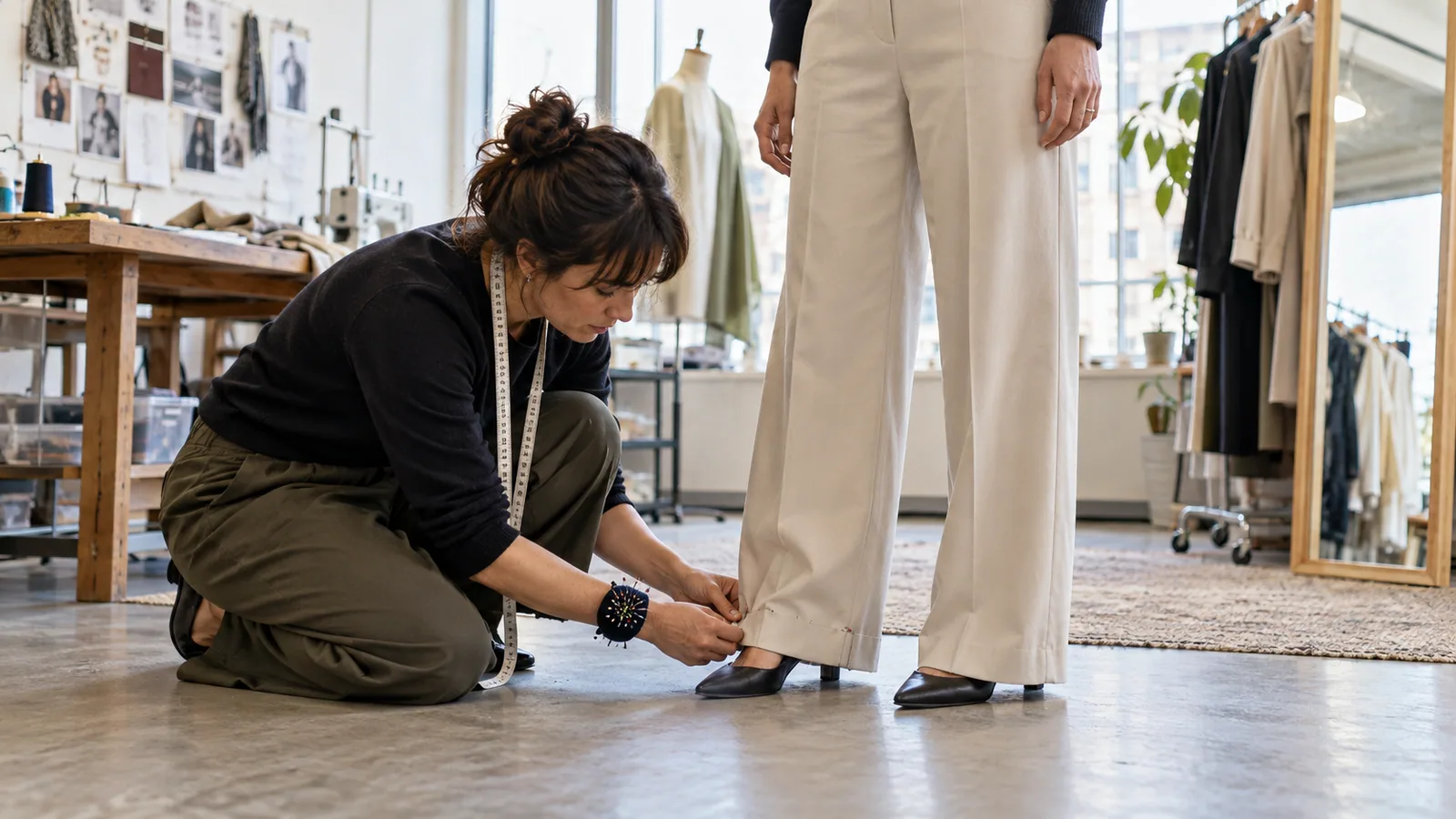
A pair of wide trousers fits cleanly through the waist and hip but pools over every shoe. A precise hem to the most-worn heel height changes the entire silhouette. The modest alteration turns an occasional purchase into a weekly piece.
Why the outfit works
Hems and sleeves define the visible relationship between clothes and body. Small length adjustments often create a larger sense of intention than adding another garment.
What to check before buying
Ask before removing tags
A tailor can explain feasibility and likely cost while the return option is still available.
Bring the full outfit
Shoes, undergarments, and layers change the correct length and ease. Fit in context.
Discuss future flexibility
Ask whether seam allowance or extra hem fabric can be preserved for later adjustments.
The Dreszine formula
- Correct shoulder or rise
- Precise hem
- Useful sleeve length
- Small waist adjustment only when needed
One thing to skip
Avoid buying a deeply discounted item that requires major reconstruction. The low purchase price does not reduce the complexity of the alteration.
Continue the edit
Browse with the checklist in mind
Use the fit and function notes above while comparing current options. Availability and pricing can change.
Explore at Nordstrom ↗The lasting idea
Spend tailoring money where a small change unlocks frequent wear. The goal is a better relationship with the garment, not a pursuit of abstract perfection.