
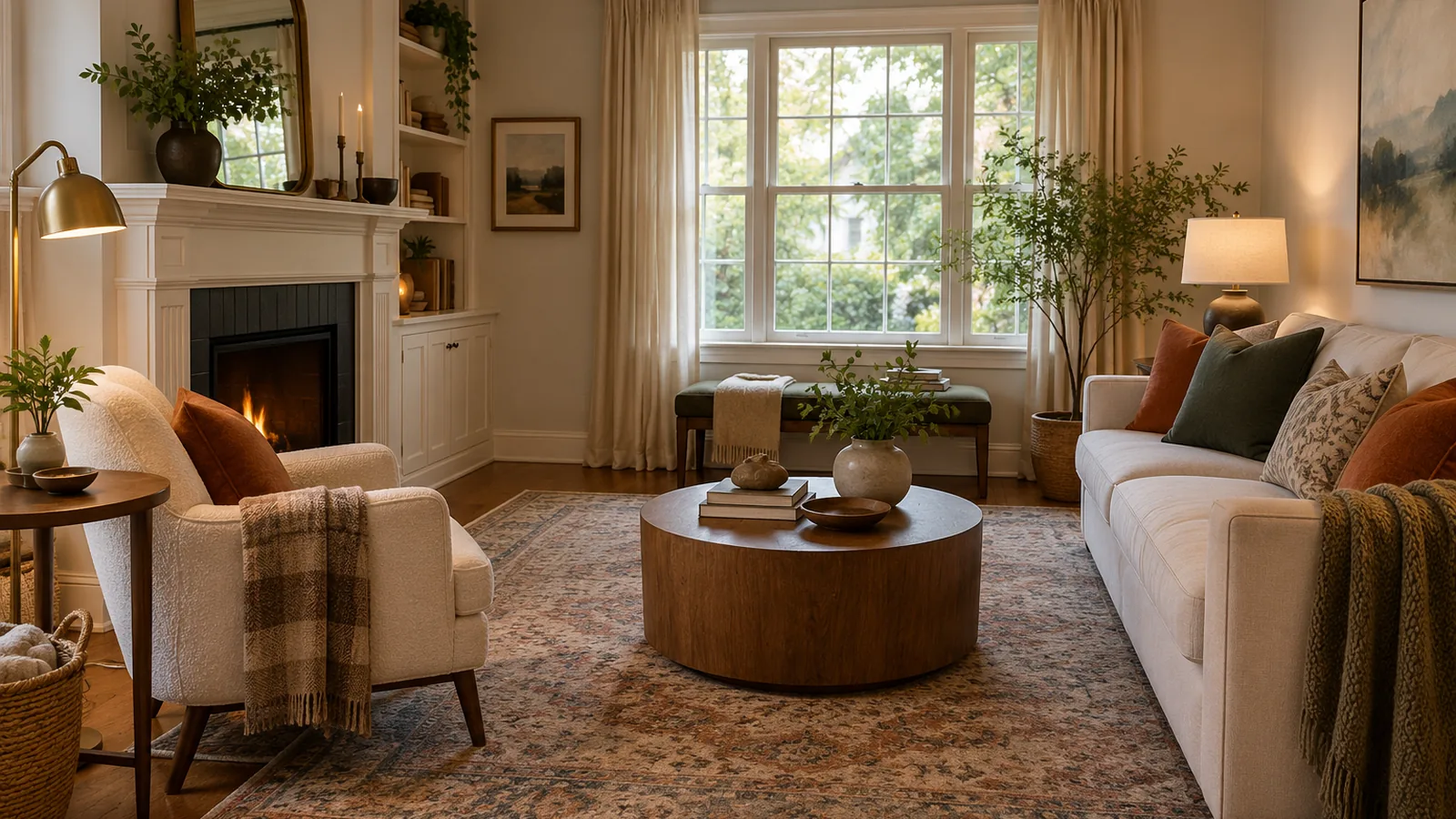
The appeal of a small living-room layout built around how you spend evenings is easy to understand, but the better test happens in ordinary life. Start with movement, conversation, and light before adding more furniture.
Think of the purchase as part of a system rather than a stand-alone object. Consider measurements, movement through the room, maintenance, and the household habits furniture must support, then decide which feature genuinely solves the repeated problem.
The real-life scene
In a narrow apartment, the sofa moves six inches from the wall, one chair angles toward it, and a round side table replaces a sharp-cornered coffee table. The route from door to window finally feels clear.
Why it works
Furniture feels generous when circulation is protected. A slightly smaller number of useful pieces often creates more comfort than pushing every possible seat against the perimeter.
What to check before buying
Tape the footprint
Use painter tape to mark furniture dimensions and walk the route at different times of day.
Measure the delivery path
Doorways, elevators, stairs, and corners matter as much as the final room.
Choose pieces with a job
Storage, lighting, or flexible seating should solve a repeated need.
The Dreszine edit
- One comfortable sofa
- One movable chair
- A table sized to the walkway
- Layered lighting
- Clear path through the room
One thing to skip
Avoid buying an undersized rug and too many tiny accent tables in an attempt to make the room feel larger. Fragmentation can make it busier.
Continue the edit
Browse with the checklist in mind
Use the fit and function notes above while comparing current options. Availability and pricing can change.
Explore at Wayfair ↗The lasting idea
A small room feels expansive when movement is easy and every seat belongs to the conversation. Plan the pathways first.