
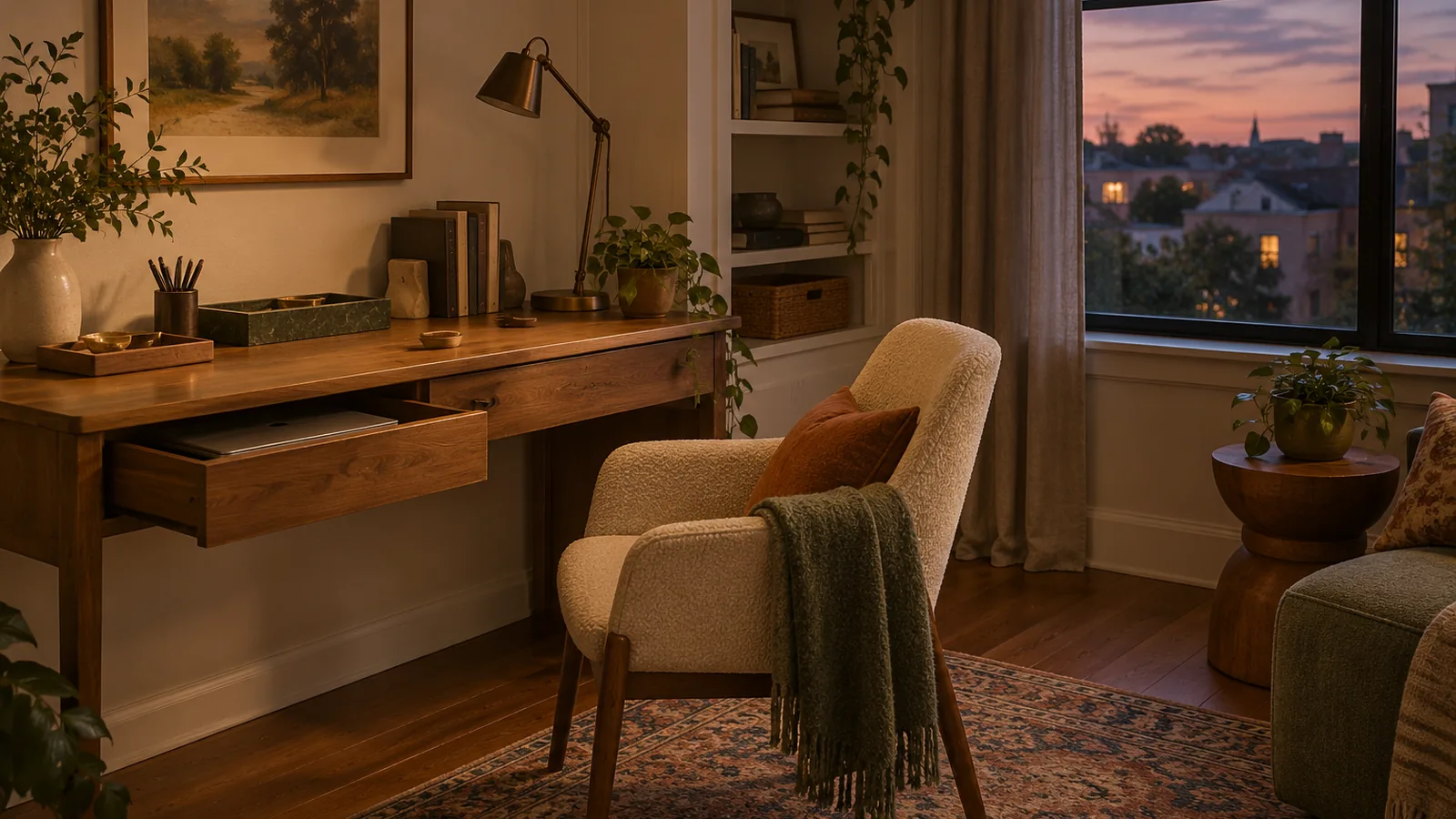
A useful approach to a home-office corner that closes at the end of the day begins with the moment it will actually be used. Compact furniture, useful light, and a shutdown ritual for rooms with more than one job.
The strongest starting point is already in the room: notice what gets used, what gets avoided, and why. Then compare options through measurements, movement through the room, maintenance, and the household habits furniture must support.
The real-life scene
At 5:30, the laptop goes into a drawer, the task light switches off, and the chair turns toward the room. A shallow desk remains, but the workday stops being the main visual.
Why it works
Physical cues help a multipurpose room change modes. Closed storage, directional light, and a short reset can separate work from rest even without a dedicated office.
What to check before buying
Fit the chair first
Desk dimensions should allow the chosen chair and comfortable leg space.
Control the cables
Use safe, accessible routing that does not create trip hazards or strain connectors.
Choose task light
Position light to reduce screen glare and illuminate writing surfaces.
The Dreszine edit
- Shallow stable desk
- Supportive chair
- Directional lamp
- One closed storage point
- Daily shutdown tray
One thing to skip
Avoid forcing a decorative chair into full workdays when it does not support comfortable posture.
Continue the edit
Browse with the checklist in mind
Use the fit and function notes above while comparing current options. Availability and pricing can change.
Explore at Wayfair ↗The lasting idea
A small office works when it can appear in the morning and recede at night. Give the workday a visible closing gesture.