
A useful approach to bedside lighting that makes evenings feel softer begins with the moment it will actually be used. Height, glare control, switches, and warm pools of light for reading and winding down.
The strongest starting point is already in the room: notice what gets used, what gets avoided, and why. Then compare options through measurements, movement through the room, maintenance, and the household habits furniture must support.
The real-life scene
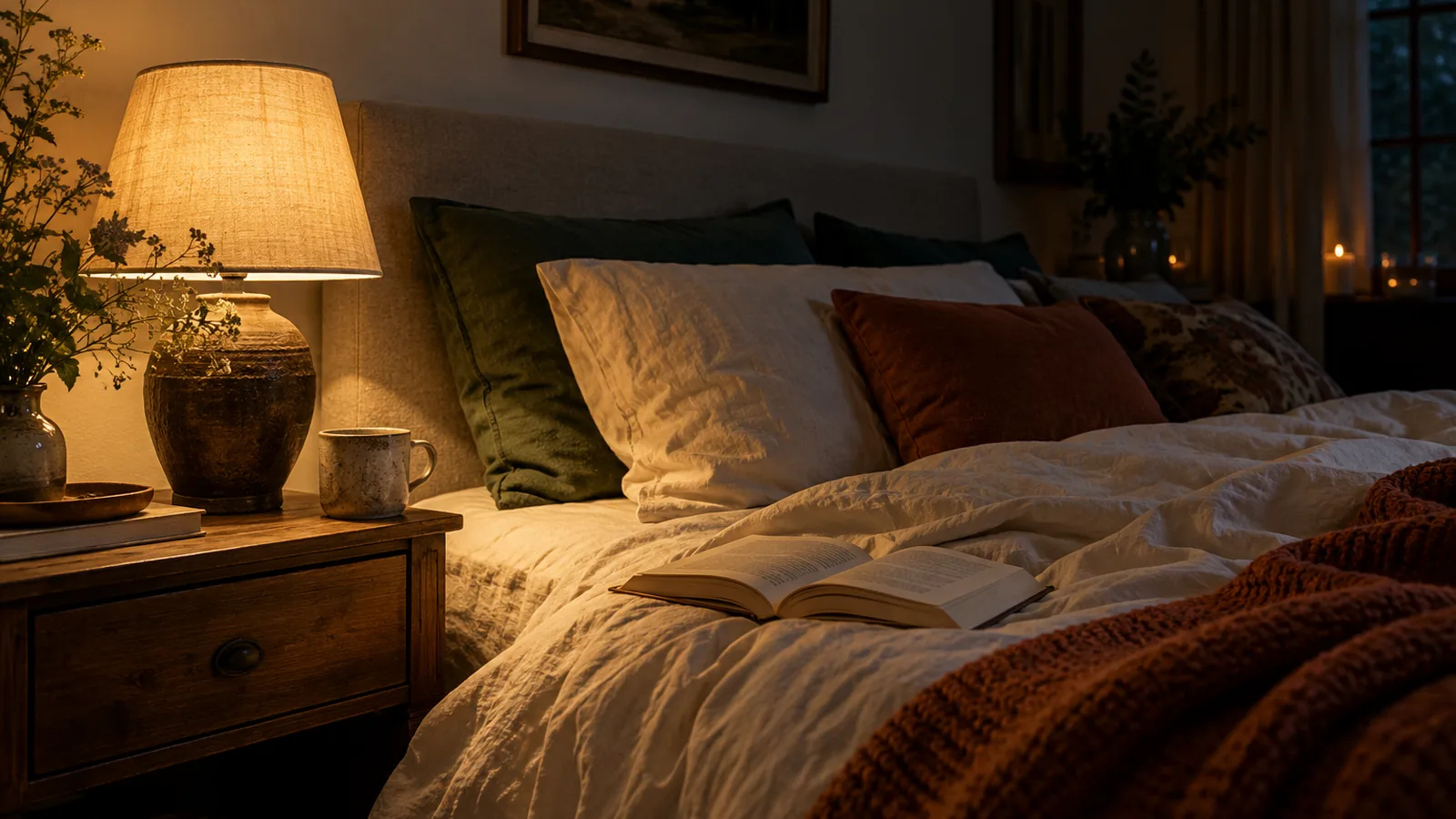
A shaded lamp sits just below shoulder level when reading in bed, with the switch reachable without standing. Overhead light turns off earlier, and the room shifts into a quieter mode.
Why it works
Lower localized light can make a room feel calmer and gives specific tasks enough illumination without flooding every surface. Adjustable direction prevents glare for two people sharing a room.
What to check before buying
Check bulb compatibility
Follow fixture limits and choose brightness and color temperature for the task.
Reach the switch
A beautiful lamp is frustrating if the cord or control disappears behind furniture.
Mind the shade
Opaque shades direct light; translucent shades spread it. Choose based on reading and ambient needs.
The Dreszine edit
- Reachable warm bedside light
- Task direction for reading
- Clear cord route
- Overhead light used selectively
One thing to skip
Avoid placing an exposed bright bulb at eye level. Glare can make a small lamp feel harsher than the ceiling fixture it replaced.
Continue the edit
Browse with the checklist in mind
Use the fit and function notes above while comparing current options. Availability and pricing can change.
Explore at Target ↗The lasting idea
Good bedside light marks the edge of the day. Put control within reach and let the room become smaller after dark.