
Wide-leg trousers need a shoe that supports their volume without catching the hem. The hidden part of the boot matters most: a shaft close enough to the ankle, a toe that extends the line, and a heel stable enough for the trouser length.
A slim or sock-like shaft lets fabric fall without a bump. An almond, softly pointed, or squared toe remains visible under a full hem and keeps the silhouette from looking heavy.
The real-life scene
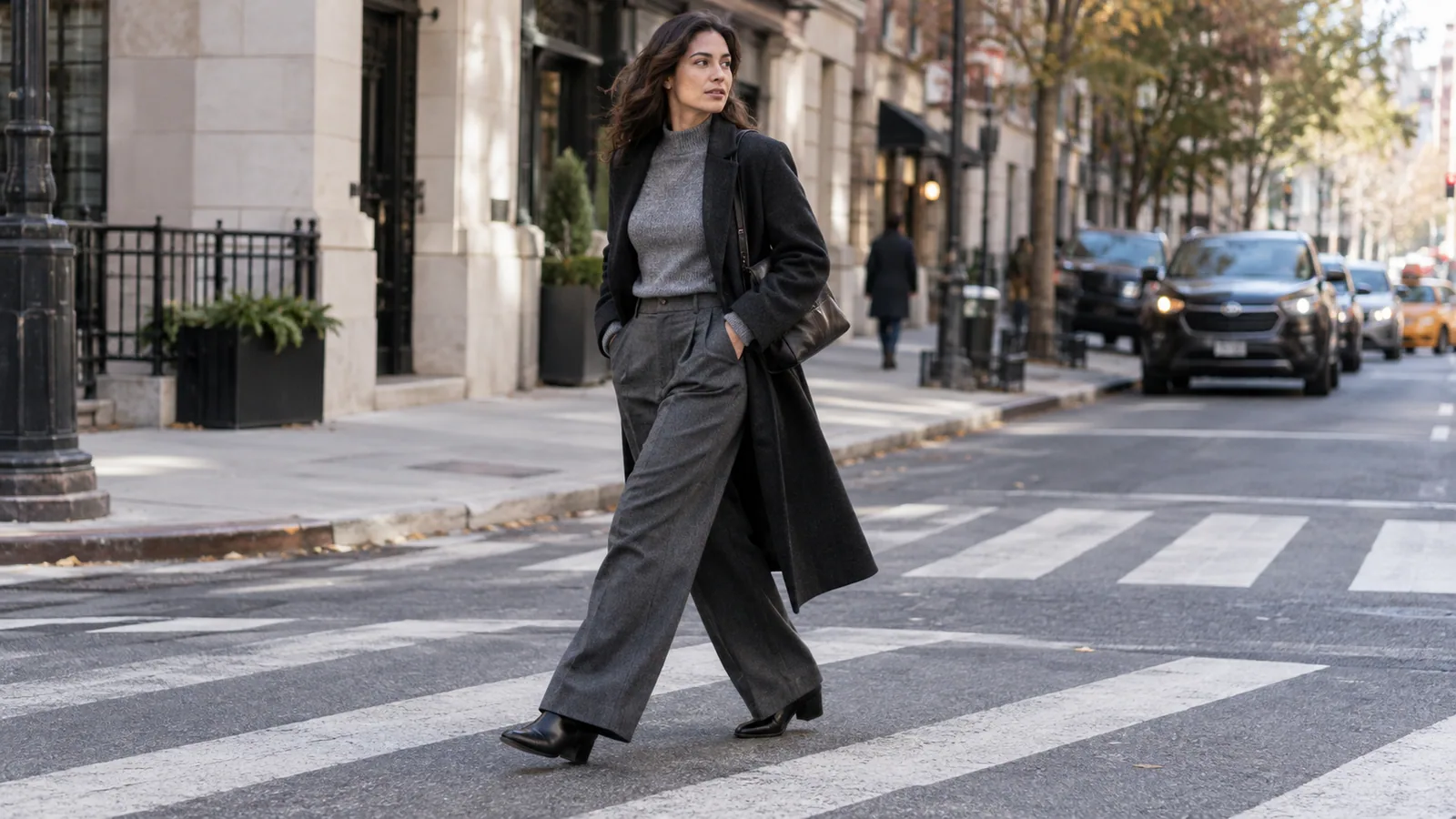
For an office day, charcoal wide trousers fall over black leather boots with a two-inch block heel. A fitted knit and long coat continue the vertical line, while the boot gives just enough lift to keep the hem off the pavement.
Why the outfit works
The boot and trouser share a dark value, so the leg line continues. A stable heel allows the fabric to skim rather than pool, and the narrow shaft prevents friction when walking.
What to check before buying
Bring the trousers
Try boots with the actual hem length. A pair can look ideal in isolation and still disappear or catch under your clothes.
Measure the shaft
Compare shaft height and opening with your narrowest trouser. A close fit at the ankle usually layers more smoothly.
Check toe pressure downhill
Walk on an incline if available. The foot should not slide forward into the toe when the heel lifts.
The Dreszine formula
- Full-length wide trouser
- Slim-shaft ankle boot
- Close knit top
- Long vertical outer layer
One thing to skip
Avoid a bulky padded collar under fluid trousers; it can grip the fabric and distort the line. Save rugged boots for cropped or deliberately pooled hems.
Continue the edit
Browse with the checklist in mind
Use the fit and function notes above while comparing current options. Availability and pricing can change.
Explore at Nordstrom ↗The lasting idea
Treat the boot as part of the trouser’s architecture. When the shaft, toe, and hem cooperate, the outfit moves as one clean shape.